
Designed with Nature: How the Landscape at Wickham Gate Works Harder
The landscape around a new home should do more than provide an attractive first impression.
It can help soften streets, create places for wildlife, manage rainwater and connect the development with its wider surroundings. At Wickham Gate, these different functions have been considered as parts of one landscape and ecological strategy.
Ecological connections across the neighbourhood
The landscaping includes boundary planting and areas of open space that provide ecological connections through the development.
Rather than treating each planted area in isolation, the development has been designed to use boundaries, gardens and open spaces to create routes through which wildlife can move. Existing boundary vegetation has also been retained where practicable, helping preserve some immediate habitat and landscape structure.
For residents, connected planting creates a softer setting around the homes, while also giving birds, bats, insects and small mammals more opportunity to move between different habitats.
Homes that provide places for wildlife
Bat and bird boxes are located throughout Wickham Gate.
These features have been incorporated within the development to provide additional nesting and roosting opportunities alongside the wider planting strategy. Hedgehog connectivity has also been included within approved boundary treatments, allowing small mammals to move between suitable gardens and landscaped spaces.
The customer benefit is not simply the presence of a box or small opening. These measures make most sense when they form part of a connected habitat network, supported by trees, hedgerows and areas of grassland.
Native trees, hedgerows and grassland
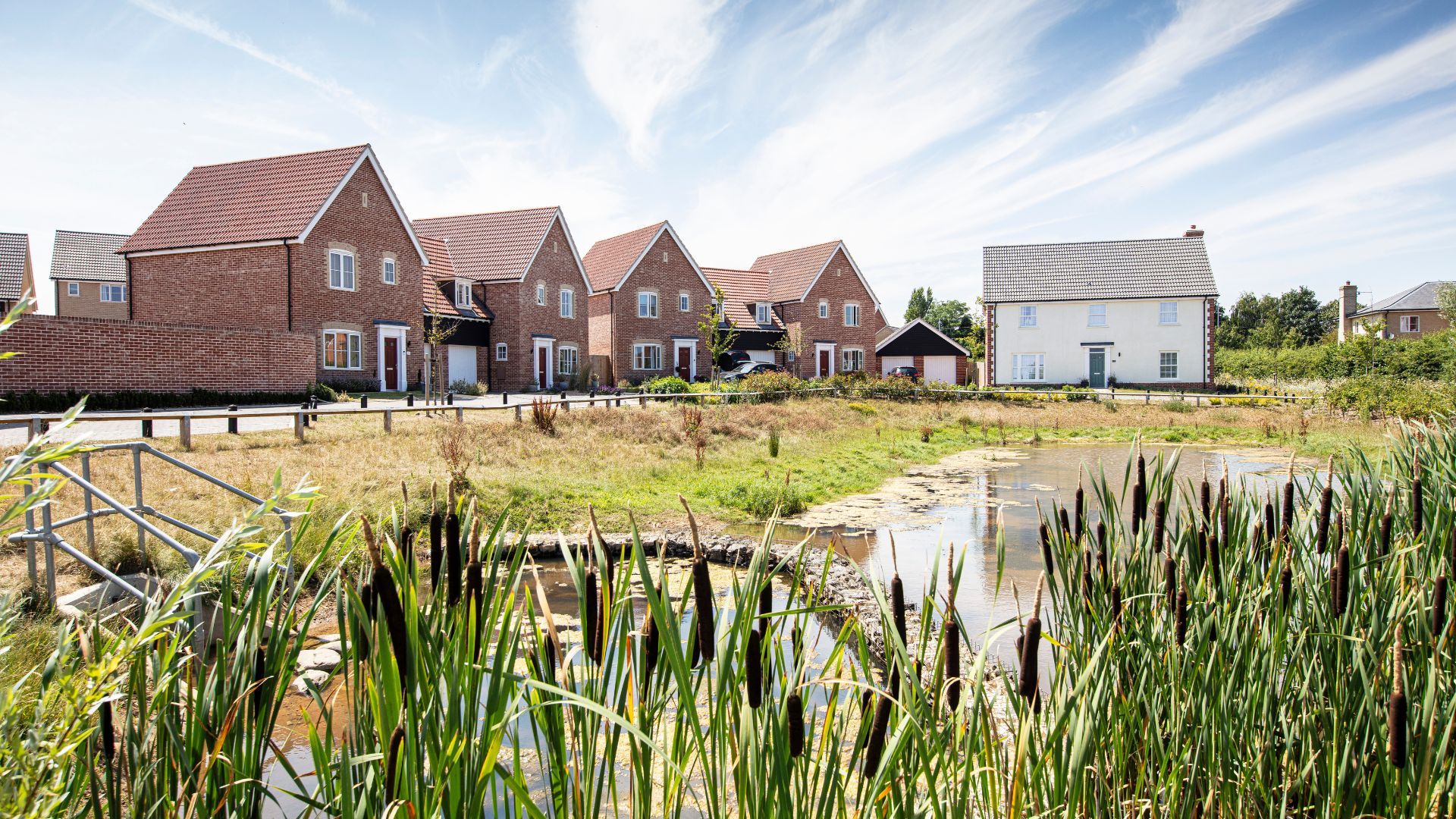
Grassland and basin-edge planting add variety within the open spaces. These areas can provide seasonal change, food and shelter for wildlife and a more natural appearance than closely mown grass alone.
The planting also helps soften the development’s boundaries, creating a more gradual transition between the homes and the wider landscape.
As the planting establishes, residents should experience changing colour, texture and wildlife activity through the seasons.
Rainwater managed through the landscape
Some of the most important parts of the landscape are also pieces of technical infrastructure.
Wickham Gate incorporates a Sustainable Drainage System designed to manage surface water responsibly on site. Drainage basins and permeable surfaces help collect, slow and store rainwater, reducing pressure on existing infrastructure.
The basins have been incorporated into the landscaped open space rather than treated solely as engineered features. Planting around their edges allows them to contribute to visual amenity and provide additional habitat.
For residents, this means that infrastructure needed to manage rainwater can also support a greener and more attractive neighbourhood.
These systems should not be described as providing an absolute guarantee against flooding. Their role is to form part of an engineered strategy for managing surface-water runoff.
Green buffers at the development edges
Landscaped buffers have been provided along the site boundaries to soften the edge of Wickham Gate.
These buffers can provide visual screening, reinforce habitat connections and help the development sit more comfortably within its surroundings.
The benefit can be experienced both from within and outside the development. Residents gain a greener outlook around parts of the neighbourhood, while the transition from the homes to the surrounding landscape feels less abrupt.
Street trees and a stronger sense of place
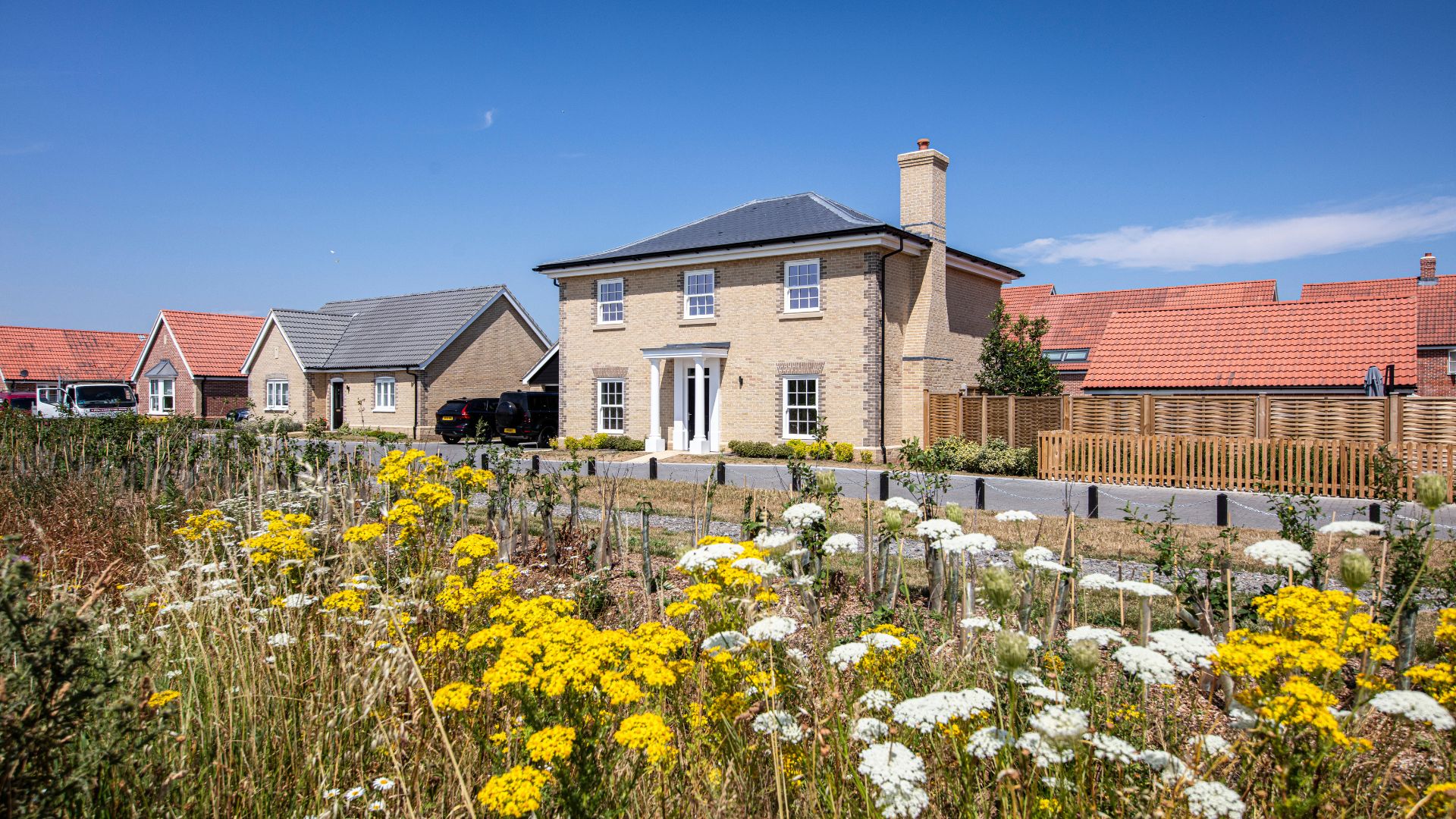
Street-tree planting has been incorporated throughout Wickham Gate.
Trees help break up views of roads and parking, frame streets and add seasonal character. Alongside softened boundary treatments and landscaped corridors, they contribute to a neighbourhood intended to feel more established and less dominated by hard surfaces.
The development’s varied materials palette and shared-surface streets also form part of this placemaking approach. The homes, highways and landscaping have been considered together to create a coherent residential character rather than as separate elements.
Practical design with more than one benefit
Thoughtful placemaking often comes from making each part of the development work harder.
A drainage basin can manage rainwater, support habitat and form part of the open-space outlook. Boundary planting can screen views, connect habitats and soften the edge of the neighbourhood. Street trees can provide greenery, structure and seasonal interest.
These features may not be the first things a customer notices when comparing kitchens or floor plans, but they help determine how the wider place feels to live in.
An established landscape you can see today
Because Wickham Gate is already more than 95% sold, customers considering the final homes can experience much of the neighbourhood in person.
They can see the completed streets, relationship between the homes and open spaces, and the way the planting is beginning to establish.
That makes it easier to understand the value of the landscape strategy than it would be at a development where every tree and green space still exists only on a plan.
Discover the final homes at Wickham Gate and experience the established setting for yourself.
Landscape planting and ecological features will continue to develop over time. Wildlife use cannot be guaranteed.